
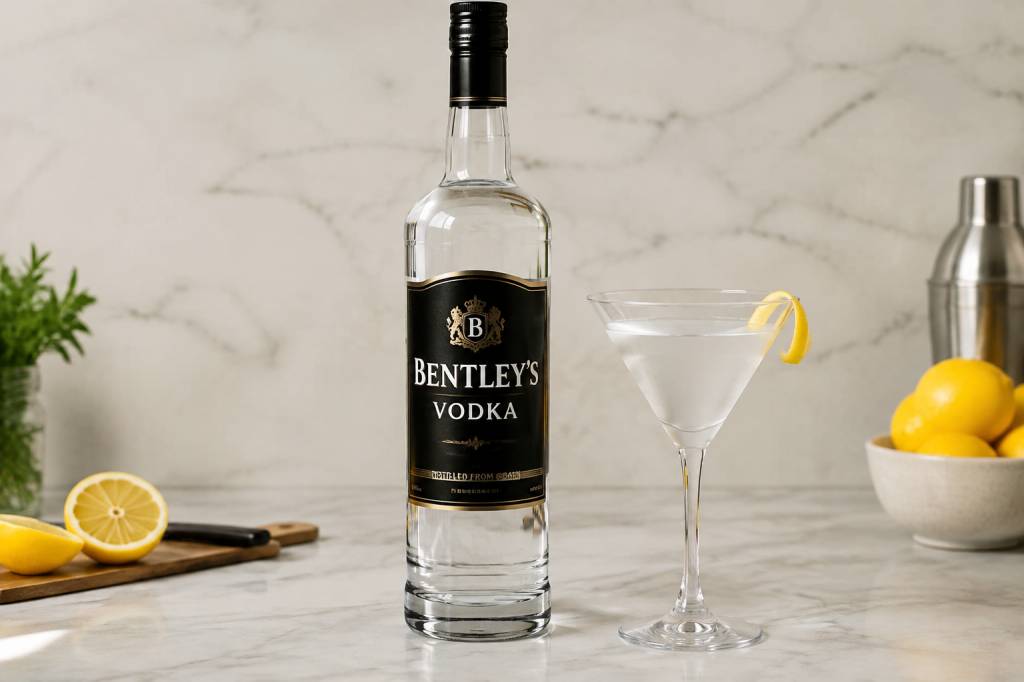
Bentley’s Vodka is the kind of bottle that often raises a practical question at the bar: what should you actually do with it? It may not have the same international profile as a luxury, heavily marketed vodka, but that does not make it useless. In fact, a straightforward vodka can be extremely handy when you understand its strengths.
The short version is this: Bentley’s works best in cocktails where vodka is part of the structure rather than the headline. Think bright citrus, crisp highballs, fruit-forward drinks, and simple mixed drinks served very cold. It can also be a sensible choice when you are making cocktails for a group and do not want to spend premium money on a spirit that will be paired with ginger beer, cranberry, pineapple, or coffee.
That said, every vodka has its own personality. The goal is not to pretend that all vodkas taste identical. The goal is to identify what is in the glass, then build around it.
What kind of vodka is Bentley’s?
Bentley’s Vodka is generally positioned as an accessible, everyday vodka rather than a prestige sipping spirit. Product details can differ depending on the country, bottle version, and market, so check the label for the alcohol percentage, production information, and whether the spirit is described as grain, corn, or another base.
That label matters. The raw material and distillation process can influence texture, sweetness, and the way the alcohol presents on the finish. Filtration also plays a role. Some vodkas aim for a completely neutral profile, while others retain a faint grain character or a soft, slightly sweet note.
In a cocktail, Bentley’s should be treated as a clean, uncomplicated base. It is not the bottle I would reach for when I want a dramatic tasting flight or a vodka served neat at room temperature. It is more useful in the role vodka has traditionally played behind the bar: carrying other flavors, adding strength, and giving a drink a smooth alcoholic backbone without introducing heavy botanical or aged-spirit notes.
Bentley’s vodka flavor profile
The best way to taste Bentley’s is simple. Chill a small pour, or taste it over a single large cube. Let it sit for a moment, then take a small sip. You are looking for three things: the opening aroma, the texture across the palate, and the finish.
- Aroma: Expect a restrained nose, with light alcohol, faint grain, and possibly a subtle sweetness rather than strong fruit, spice, or herbal notes.
- Palate: The profile is generally mild and neutral-leaning, with a soft grain impression and enough body to work in mixed drinks.
- Texture: Chilling and dilution can make it feel smoother and rounder. At room temperature, the alcohol may be more obvious.
- Finish: The finish is relatively short to medium, which is useful in cocktails because it does not linger over citrus, spice, or fresh fruit.
That neutral character is the main advantage. Vodka does not need to taste like much to be effective. In a Moscow Mule, for example, the ginger beer supplies spice and sweetness, the lime brings acidity, and the vodka quietly holds everything together. Bentley’s can fill that role without competing for attention.
There may be a slight warming sensation on the finish, especially if the vodka is tasted neat or used in a drink with very little dilution. That is not necessarily a flaw. It simply tells you to pay attention to temperature, ice, and balance. A well-chilled drink with fresh ingredients will almost always show the spirit more favorably than a warm pour thrown into a glass with two melting ice cubes.
Is Bentley’s good for sipping?
That depends on your expectations. If you enjoy evaluating vodka on its own, serve it cold but not frozen. Extreme freezing can hide both harshness and character, making every bottle seem smoother than it really is. A refrigerator-chilled pour gives you a better sense of the spirit.
Bentley’s is more naturally suited to casual sipping than formal spirit appreciation. Serve it alongside salty foods, smoked fish, pickles, or simple bar snacks, and its clean profile can work well. Keep the pour small and the vodka properly chilled.
Would I build a tasting menu around it? Probably not. Would I pour it for friends before dinner, use it in a highball, or mix a round of Martinis for a relaxed gathering? Absolutely. There is a difference between a vodka designed to be the star and one designed to be dependable. Bentley’s belongs in the second category.
The best cocktail styles for Bentley’s
Because Bentley’s is mild and versatile, it fits several classic cocktail families. Start with recipes that use fresh acidity, aromatic mixers, or a strong textural element.
Vodka Soda
This is the most direct test. Add 2 ounces of Bentley’s to a tall glass filled with fresh ice. Top with 4 to 5 ounces of chilled soda water, then add a generous squeeze of lime. Stir once or twice.
The drink is only as good as its ingredients. Use cold soda water, firm ice, and fresh citrus. A flat mixer and weak ice will make any vodka seem rough. If the drink tastes too lean, add a small splash of grapefruit soda or a teaspoon of simple syrup.
Moscow Mule
Combine 2 ounces of Bentley’s, ½ ounce of fresh lime juice, and 4 to 5 ounces of ginger beer in a mule mug or tall glass filled with ice. Stir briefly and garnish with a lime wedge.
Choose ginger beer carefully. A spicy, dry brand will make a sharper Mule, while a sweeter brand creates a softer, more approachable drink. Bentley’s works particularly well here because it does not add competing flavors.
Vodka Collins
Shake 2 ounces of vodka, ¾ ounce of fresh lemon juice, and ½ ounce of simple syrup with ice. Strain into a tall glass filled with fresh ice and top with soda water.
This is a useful recipe when you want to show that vodka does not have to mean a sugary fruit drink. The lemon gives the cocktail structure, while the soda adds lift. If your vodka has a slightly grainy or warm finish, the citrus and dilution help smooth the edges.
Cosmopolitan
For one drink, shake 1½ ounces of Bentley’s, ¾ ounce of orange liqueur, ¾ ounce of cranberry juice, and ½ ounce of fresh lime juice with ice. Strain into a chilled Martini or coupe glass.
The Cosmo is often made too sweet. Use cranberry juice for color and acidity, not as a substitute for balance. If the drink needs more brightness, add a few extra drops of lime rather than another half-ounce of liqueur.
White Russian
Build 2 ounces of Bentley’s and 1 ounce of coffee liqueur over ice. Add 1 ounce of heavy cream or half-and-half and stir gently.
This is a comfortable match for a neutral vodka. Coffee liqueur supplies roasted sweetness, while the dairy adds body. For a lighter version, use chilled milk or oat milk, though the texture will be less rich.
A simple Bentley’s Martini
A Martini is less forgiving than a Mule or a fruit cocktail, so technique matters. For a clean, approachable version, stir 2½ ounces of Bentley’s with ½ ounce of dry vermouth over plenty of ice for about 20 to 25 seconds. Strain into a chilled Martini glass and garnish with a lemon twist or green olive.
If the vodka tastes hot, do not immediately blame the bottle. Check the dilution first. A Martini stirred for only a few seconds may be too concentrated. Use plenty of cold ice and stir long enough to chill the drink properly.
You can also make the Martini slightly wetter by increasing the vermouth to ¾ ounce. This adds herbal complexity and makes a more balanced drink, especially when the vodka itself is deliberately subtle.
Fresh ingredients make the difference
Affordable vodka does not mean you should use tired mixers. In fact, fresh ingredients become even more important when the spirit is not bringing a lot of distinctive flavor to the glass.
- Use fresh lemon and lime juice whenever possible.
- Chill bottled mixers before opening them.
- Use solid, dense ice rather than small, fast-melting cubes.
- Measure sweeteners instead of pouring by guesswork.
- Garnish with something that contributes aroma, not just color.
A lemon twist, for instance, adds fragrant oils that can make a simple Vodka Soda feel more polished. Express the peel over the surface of the drink, rub it around the rim, and discard or drop it into the glass.
Common mistakes to avoid
The most common mistake is using too much vodka and not enough dilution. A strong drink is not automatically a better drink. If a cocktail tastes hot, add ice and stir or shake again. In some cases, a small amount of water is exactly what the recipe needs.
Another problem is relying on overly sweet mixers to cover the alcohol. That usually creates a heavy drink rather than a balanced one. Start with less sugar, taste, and adjust gradually.
Do not freeze every bottle of vodka by default, either. Freezing Bentley’s can make it feel smoother, but it also hides the flavor profile. For cocktails, refrigerator temperature is usually enough. The ice in the shaker or mixing glass will handle the rest.
Finally, avoid treating vodka as completely flavorless. Even a neutral spirit changes the final drink. If Bentley’s seems a little warmer or fuller than the vodka you normally use, pair it with sharper citrus, more aromatic mixers, or a touch of extra dilution.
How Bentley’s compares with premium vodka
Premium vodka often offers a softer texture, a cleaner finish, or a more polished presentation. You may notice less alcohol heat when drinking it neat or in a very spirit-forward cocktail. That can matter in a Vodka Martini, Vodka Gimlet, or chilled shot.
In a drink with ginger beer, cranberry juice, tonic, coffee liqueur, or pineapple, the difference may be much less obvious. This is where Bentley’s makes practical sense. You are choosing where the money matters most. Spend more on premium vodka when the spirit is exposed; use Bentley’s when the recipe gives the spotlight to fresh juice, herbs, spices, or a flavorful mixer.
That is a rule I learned early behind the bar: match the bottle to the drink, not to the ego of the person making it. A budget-friendly vodka can produce an excellent cocktail if the recipe is balanced and the technique is sound.
My favorite easy serve
For a fast, refreshing drink, try a Ginger-Lime Highball. Fill a tall glass with ice, add 2 ounces of Bentley’s, ½ ounce of fresh lime juice, and ¼ ounce of simple syrup. Top with spicy ginger beer, stir gently, and finish with a lime wheel.
The vodka provides a clean foundation, the lime adds snap, and the ginger beer supplies heat and carbonation. If your ginger beer is already sweet, skip the simple syrup. If it is very dry, add it in small increments until the drink tastes rounded.
Bentley’s Vodka may not be the bottle you open for a long tasting session, but it can be a reliable tool in a home bar. Keep it cold, measure carefully, use fresh citrus, and choose cocktails that let its clean profile work to your advantage. In the right glass, with the right amount of ice, an understated vodka can be exactly what the recipe needs.