


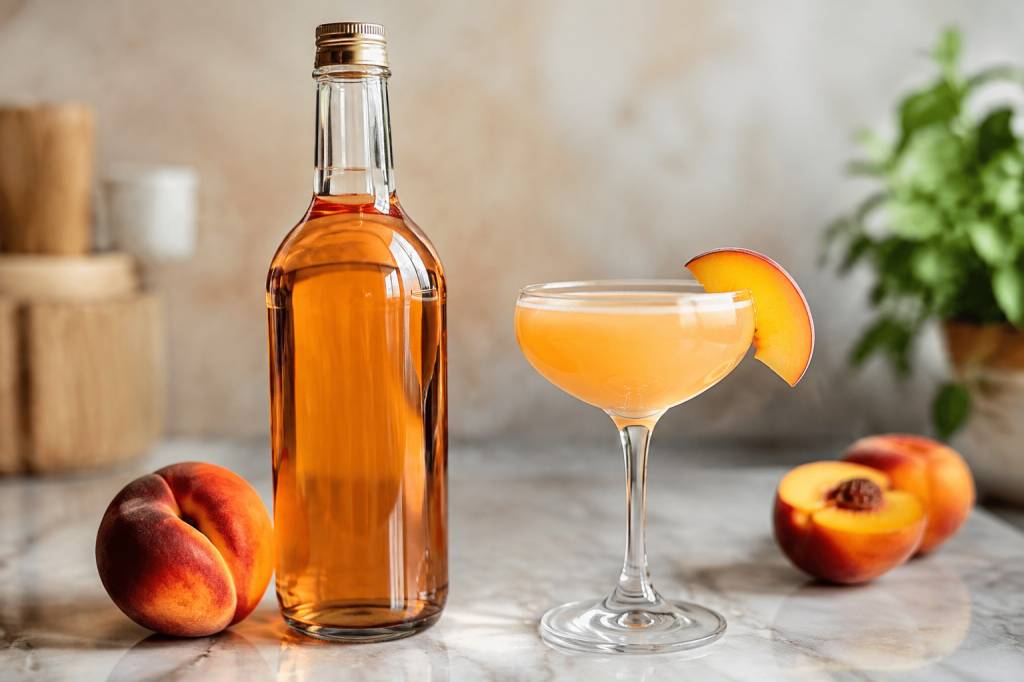
Peach schnapps is one of those bottles that can look simple on the shelf and behave very differently in the glass. It is sweet, fruity, and easy to mix, but its alcohol content can range from fairly light to surprisingly strong depending on the style and brand.
That matters when you are building a cocktail. A peach schnapps drink can be a refreshing, low-proof sipper—or a deceptively powerful party pour with several spirits working together. Before you reach for the bottle, it helps to know what is actually inside it.
How much alcohol is in peach schnapps?
Most peach schnapps sold for cocktails in the United States contain between 15% and 20% alcohol by volume, commonly written as ABV. Many popular peach schnapps brands sit around 15% ABV, while others are closer to 20%.
For comparison, standard vodka, gin, rum, and whiskey are usually around 40% ABV. Peach schnapps is therefore much lighter than a base spirit, but it is not alcohol-free or merely a flavored syrup.
There is one important complication: the word “schnapps” does not mean exactly the same thing everywhere.
- American-style peach schnapps: Usually a sweet, fruit-flavored liqueur with an ABV around 15% to 20%.
- Peach-flavored vodka: Often 30% to 40% ABV, depending on the brand. It may look similar on the back bar but packs more alcoholic strength.
- Traditional European schnaps or fruit brandy: Often much drier and stronger, sometimes around 30% to 40% ABV or higher. These products are not the same as the sweet peach liqueur used in many American cocktail recipes.
- Peach liqueurs with premium or craft positioning: These may vary widely, so the label is always more reliable than the category name.
The practical rule is simple: check the bottle. The ABV, or alcohol percentage, is printed on the label. If the bottle says 15% ABV, that is the number to use when estimating the strength of your drink.
Peach schnapps versus peach liqueur
In everyday cocktail language, “peach schnapps” and “peach liqueur” are often used interchangeably. They are usually sweet, peach-flavored products designed to add fruit character and sugar to mixed drinks.
Technically, however, the terms can point to different styles. A liqueur is a spirit flavored and sweetened with ingredients such as fruit, herbs, spices, or extracts. American peach schnapps generally fits this description. Traditional schnaps, on the other hand, is often a distilled fruit spirit with little or no added sugar.
This difference affects both flavor and strength. A sweet peach liqueur may taste like ripe peach candy and contribute a smooth, syrupy texture. A dry peach brandy may taste more like the fruit itself, with a sharper finish and considerably more alcohol.
That is why substituting one for the other can change a cocktail dramatically. If a recipe calls for one ounce of 15% peach schnapps and you use one ounce of 40% peach brandy, the drink will be much stronger and less sweet. The cocktail may still work, but it is no longer the same formula.
How much alcohol does peach schnapps add to a cocktail?
The easiest way to estimate the alcohol contributed by peach schnapps is to multiply the volume by the ABV.
For example, one fluid ounce of peach schnapps at 15% ABV contains:
1 ounce × 0.15 = 0.15 fluid ounces of pure alcohol
That is less than one ounce of 40% vodka, which contains:
1 ounce × 0.40 = 0.40 fluid ounces of pure alcohol
So peach schnapps is a relatively mild ingredient on its own. The catch is that cocktail recipes rarely stop at peach schnapps. They often combine it with vodka, rum, tequila, sparkling wine, or another liqueur.
Take a simple peach cocktail made with:
- 1 ounce vodka at 40% ABV
- 1 ounce peach schnapps at 15% ABV
- 3 ounces cranberry juice
The drink contains about 0.55 fluid ounces of pure alcohol before dilution from shaking or melting ice. That is substantially stronger than a drink made with peach schnapps and juice alone.
The sweet peach flavor can make the alcohol seem softer, but it does not make the alcohol disappear. This is one of the reasons peach schnapps cocktails can be easy to drink faster than intended.
What is a standard drink?
In the United States, one standard drink contains approximately 0.6 fluid ounces of pure alcohol. That is roughly equivalent to:
- 12 ounces of beer at 5% ABV
- 5 ounces of wine at 12% ABV
- 1.5 ounces of 40% distilled spirits
A 1.5-ounce pour of peach schnapps at 15% ABV contains about 0.225 fluid ounces of pure alcohol, so it is less than half of a standard drink by itself. But a cocktail containing vodka, peach schnapps, and another spirit can quickly reach one standard drink or more.
For home bartending, the important habit is measuring every alcoholic ingredient. Free-pouring looks impressive behind a busy bar, but it is not the best way to control strength—especially when the bottle contains a sweet spirit that makes heavy pours difficult to notice.
Why peach schnapps cocktails can taste stronger than expected
Sweetness changes your perception of alcohol. Sugar rounds off sharp edges and covers some of the heat you would notice in a neat pour of vodka or whiskey. Fruit juice adds acidity and aroma, while carbonation creates a lively, easy-drinking texture.
That combination is useful for cocktail design, but it can also be misleading. A fuzzy peach flavor does not tell you how much alcohol is in the glass.
Temperature plays a role, too. Chilling and dilution from ice soften the drink. A well-shaken cocktail may taste smooth and light even when it contains two ounces of spirits. Once the ice melts, the flavor changes again, but the total amount of alcohol remains the same.
During my restaurant days, I saw this most often with large-format party drinks. Someone would add vodka, peach schnapps, orange juice, cranberry juice, and sparkling wine to a pitcher. The result tasted like fruit punch, so guests treated it like fruit punch. The pitcher, however, contained several servings of alcohol. The lesson is straightforward: flavor is not a reliable measure of strength.
Popular peach schnapps drinks and their typical strength
Different recipes use peach schnapps in different ways. Here is what to expect from a few common styles.
Fuzzy Navel: Usually made with peach schnapps and orange juice. If you use 1.5 ounces of 15% peach schnapps, the drink contains about 0.225 fluid ounces of pure alcohol. It is relatively light compared with cocktails built on vodka or whiskey.
Woo Woo: Often made with vodka, peach schnapps, and cranberry juice. A typical recipe might use 1 ounce of each spirit. The vodka does most of the work when it comes to alcohol strength, while the schnapps supplies sweetness and peach flavor.
Sex on the Beach: Recipes vary, but the drink commonly includes vodka, peach schnapps, orange juice, and cranberry juice. Some versions add another fruit liqueur. Because several ingredients and brands are involved, the final strength can range from moderate to fairly strong.
Peach Bellini: A Bellini-style drink combines peach purée or peach liqueur with sparkling wine. The alcohol level depends on how much sparkling wine is used and whether the peach ingredient is a 15% liqueur or a stronger peach spirit. It is a beautiful brunch drink, but bubbles make it especially easy to consume quickly.
Peach margarita: Tequila remains the main source of alcohol, while peach schnapps adds sweetness and fruit character. If the recipe contains tequila, triple sec, and peach schnapps, the drink may be considerably stronger than its bright color suggests.
How to read the ABV on a peach schnapps bottle
Look for “ABV” or “alcohol by volume” on the label. In some markets, the bottle may also show “proof.” In the United States, proof is generally twice the ABV.
- 15% ABV equals 30 proof.
- 20% ABV equals 40 proof.
- 30% ABV equals 60 proof.
- 40% ABV equals 80 proof.
If a bottle says 30 proof, it is a 15% ABV product. If it says 80 proof, you are dealing with a spirit-strength product, not a typical light peach schnapps.
Also check the serving size on the recipe. A half-ounce measure of a 20% liqueur contributes less alcohol than a two-ounce pour, even though both come from the same bottle. The label tells you the concentration; your jigger controls the quantity.
Does peach schnapps expire?
Because peach schnapps contains alcohol and sugar, it usually keeps for a long time when stored properly. An unopened bottle can remain usable for years, although the peach aroma and color may slowly fade.
Once opened, oxygen and temperature begin to affect quality. Store the bottle tightly closed, away from direct sunlight and extreme heat. A cool cabinet is usually sufficient. Refrigeration is not generally required, but chilled peach schnapps can be useful in certain drinks.
Before mixing, check for changes in smell, appearance, or flavor. A flat aroma, unusual cloudiness, or stale sweetness is a good reason to replace the bottle. Alcohol may preserve the product, but it does not guarantee that the flavor will remain at its best forever.
Using peach schnapps without making an overly sweet drink
Peach schnapps is sweet by design, so balance matters. If you add it to a cocktail that already contains fruit juice, sweet vermouth, soda, or another liqueur, the drink can become heavy quickly.
A few practical adjustments help:
- Start with ½ to ¾ ounce of peach schnapps instead of automatically using a full ounce.
- Add fresh lemon or lime juice to provide acidity.
- Use dry sparkling wine or soda water to lighten the finish.
- Choose a less-sweet juice, such as unsweetened cranberry juice, when possible.
- Measure the base spirit separately so the cocktail stays balanced rather than simply becoming stronger.
For a simple, balanced highball, try ¾ ounce peach schnapps, 1 ounce vodka, ½ ounce fresh lemon juice, and 3 ounces chilled soda water over ice. Stir gently and garnish with a peach slice or lemon wheel. The peach remains noticeable, but the drink does not taste like melted candy.
Can you drink peach schnapps straight?
Yes, especially if you enjoy sweet, fruit-forward drinks. A 15% peach schnapps can be served chilled or over ice, although many bottles are formulated primarily for mixing rather than sipping.
For a better neat tasting, pour a small amount into a shot glass and compare it at room temperature and chilled. Chilling reduces the perception of sweetness and alcohol, while room temperature reveals more of the aroma. If the schnapps tastes syrupy on its own, use it as a modifier rather than the main ingredient in a cocktail.
Stronger peach spirits can be enjoyed neat in the same way as fruit brandy, but they should not be confused with the softer, sweeter peach liqueur used in party recipes.
Smart mixing starts with the label
Peach schnapps is usually a moderate-strength liqueur, most often between 15% and 20% ABV. That makes it lower in alcohol than vodka, gin, rum, or whiskey, but its contribution still matters—especially when it is combined with a full-strength base spirit.
Check the bottle, measure the pour, and pay attention to the other alcoholic ingredients in the recipe. If you know the ABV, you can adjust the proportions, control the sweetness, and serve a cocktail that tastes exactly as intended.
That is the real advantage of understanding your ingredients. Peach schnapps can bring bright fruit flavor and an easy-drinking texture to the glass, but the best cocktails are not accidental. They are balanced, measured, and built with a clear idea of what each bottle contributes.