
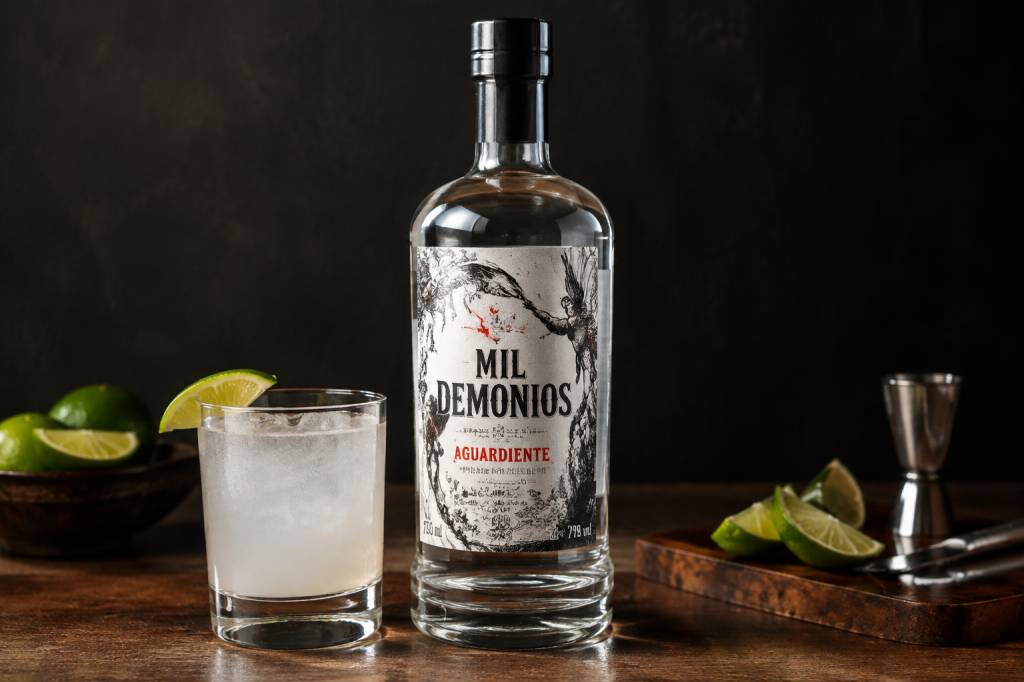
Some spirits announce themselves quietly. Aguardiente Mil Demonios does the opposite. Open the bottle and you get an immediate hit of anise, sweet cane spirit, and warm spice—the kind of aroma that makes you stop mid-pour and ask, “What exactly am I working with here?”
Mil Demonios is a Colombian aguardiente with a bold personality and a clear connection to the country’s drinking culture. It is not vodka with a little anise added at the end, and it is not simply a sweet liqueur. Think of it as a cane-based spirit shaped by anise, regional tradition, and a modern brand identity that is comfortable being a little mischievous.
In this guide, we’ll look at where aguardiente comes from, what Mil Demonios tastes like, how to serve it, and which cocktails make the most of its character. The short version: treat it as a distinctive base spirit, not as a neutral substitute for vodka or rum.
What Is Aguardiente?
The word aguardiente translates roughly as “fiery water.” It is a broad Spanish-language term used for distilled spirits, but the exact style changes from country to country. In Colombia, aguardiente is generally made from sugar-cane-derived alcohol and flavored prominently with anise.
That anise profile is the key. Depending on the producer, you may notice notes of licorice, fennel seed, fresh herbs, pepper, citrus peel, or baking spice. Colombian aguardiente is usually bottled at a moderate strength, often around 29 percent alcohol by volume, although exact specifications can vary by product and market.
Colombia’s aguardiente culture is deeply social. It appears at family celebrations, festivals, concerts, football gatherings, and long evenings with friends. Traditionally, it is served neat in small glasses or taken as a shot, often alongside food and lively conversation. The ritual is simple: pour, toast, sip—or shoot—and keep the evening moving.
Mil Demonios fits into that tradition while presenting itself with a contemporary edge. The name translates to “a thousand demons,” which gives you a pretty accurate warning about its attitude. This is not a shy spirit designed to disappear into a mixer.
The Origins of Mil Demonios
Mil Demonios is a Colombian aguardiente, rooted in the country’s sugar-cane distilling tradition and the national affection for anise-forward spirits. Like many aguardientes, its identity comes from the balance between a clean, slightly sweet cane spirit and the aromatic lift of anise.
Colombian aguardiente is often associated with specific regions and local distilleries, and recipes can differ noticeably from one bottle to another. Some versions are dry and herbal. Others lean sweeter, with a rounder texture and a more pronounced licorice note. That is why it is useful to taste Mil Demonios on its own before deciding how you want to mix it.
One detail worth remembering: product formulas, alcohol levels, and labeling can differ depending on the country where the bottle is sold. Always check the label, especially when adapting a recipe that was created for a different market. In cocktails, a one- or two-percent difference in alcohol may not sound dramatic, but sweetness and flavor intensity can change the balance.
From behind the bar, this is the sort of bottle I would describe as “a conversation starter.” Guests who know aguardiente tend to have an immediate opinion. Guests who do not know it usually want to smell the glass twice before taking the first sip. Both reactions are useful. A memorable spirit gives you something to build around.
Flavor Profile: What Does Mil Demonios Taste Like?
The first impression is aromatic. Expect anise and licorice, followed by a soft sweetness and the gentle heat of alcohol. Depending on how cold it is served, you may also find hints of fennel, green herbs, citrus, pepper, and cane sugar.
On the palate, Mil Demonios is typically more expressive than a neutral white spirit. The texture can feel smooth and slightly oily, allowing the anise character to linger. The finish is warming, with a sweet-herbal note that stays around longer than you might expect.
Here is a practical tasting breakdown:
- Nose: anise, licorice, sweet cane, fresh herbs, and light spice.
- First sip: soft sweetness with a clear herbal intensity.
- Mid-palate: fennel-like spice, pepper, and a rounded cane spirit character.
- Finish: warm, aromatic, and persistent.
Temperature matters. Served at room temperature, the anise and alcohol are more assertive. Chilled, the spirit becomes cleaner and easier to sip, though the sweetness and aromatic finish remain. If you are introducing it to someone new, start cold. You can always let it warm slightly in the glass.
How to Serve It Neat
The simplest serve is often the best place to begin. Pour 1½ ounces of Mil Demonios into a small tumbler or shot glass and chill it well. You can keep the bottle in the refrigerator or serve the spirit over a large cube.
Many Colombian drinkers enjoy aguardiente neat, without garnish. That approach lets the anise take center stage. If you want a little contrast, serve it with a wedge of lime or a small glass of sparkling water. The lime adds acidity, while soda refreshes the palate without covering the spirit’s identity.
A common mistake is to bury aguardiente under too much sugar. Mil Demonios already brings sweetness and a strong aromatic profile. A good first cocktail should add freshness, bitterness, or dilution—not simply more syrup.
Building Cocktails with Mil Demonios
When working with anise-forward spirits, balance is everything. You need ingredients that either sharpen the drink or give the spirit room to breathe. Citrus is an obvious partner, but it is not the only one.
- Lime and lemon: acidity cuts through sweetness and makes the drink feel brighter.
- Grapefruit: brings bitterness and a fresh, slightly tart edge.
- Ginger: adds heat without competing directly with the anise.
- Cucumber: gives the spirit a cool, clean frame.
- Mint and basil: reinforce its herbal side.
- Dry vermouth: adds structure and turns it into a more serious aperitif-style drink.
- Bitters: help control sweetness and add depth.
Use a light hand with strongly flavored ingredients such as vanilla, cinnamon, heavy cream, or smoky spirits. They can work, but they can also turn the drink into a crowded room where nobody can hear the conversation.
Mil Demonios Highball
This is the easiest introduction for a guest who is unsure about anise. The carbonation stretches the spirit, while lime keeps the drink crisp.
- 1½ ounces Mil Demonios aguardiente
- ½ ounce fresh lime juice
- ¼ ounce simple syrup, optional
- 3 to 4 ounces chilled soda water
- Lime wheel, for garnish
Add the aguardiente, lime juice, and optional syrup to an ice-filled highball glass. Stir briefly, top with soda water, and give the drink one gentle lift from the bottom with a bar spoon. Garnish with a lime wheel.
Skip the syrup if you prefer a drier drink. If the lime is particularly sharp, add it in small increments rather than automatically using the full amount. Fresh juice varies; cocktails do not read recipes as strictly as we do.
The Andean Sour
A sour format gives Mil Demonios a polished cocktail structure. The egg white is optional, but it softens the edges and creates a silky texture.
- 2 ounces Mil Demonios aguardiente
- ¾ ounce fresh lemon juice
- ½ ounce simple syrup
- 1 egg white, optional
- 2 dashes aromatic bitters
- Lemon peel or a few drops of bitters, for garnish
Add all ingredients except the bitters to a shaker. If using egg white, shake without ice first for about 10 seconds. Add ice and shake again until the tin is cold. Double strain into a chilled coupe or rocks glass over fresh ice. Finish with bitters or a lemon peel.
The first shake, known as a dry shake, helps create a stable foam. If you are avoiding egg, aquafaba can provide a similar texture. Use about ¾ ounce of aquafaba and shake it the same way.
Mil Demonios and Tonic
Not every drink needs six ingredients. Aguardiente and tonic is a quick, refreshing serve with enough bitterness to keep the anise from becoming too sweet.
- 1½ ounces Mil Demonios aguardiente
- 4 ounces premium tonic water
- Grapefruit or lime wedge
- Optional: a small pinch of salt
Fill a wine glass or highball with ice. Add the aguardiente, then pour in the tonic slowly to preserve carbonation. Stir once and garnish with grapefruit or lime.
A tiny pinch of salt can make the citrus taste brighter, but do not overdo it. The goal is to sharpen the drink, not turn it into a savory cocktail.
Aguardiente Mule
Ginger beer is one of the best partners for Mil Demonios. Its spice echoes the spirit’s warmth, while its bubbles make the finish feel lighter.
- 1½ ounces Mil Demonios aguardiente
- ½ ounce fresh lime juice
- 4 ounces ginger beer
- 2 dashes Angostura bitters, optional
- Lime wedge and mint, for garnish
Build the drink in a mule mug or tall glass filled with ice. Add aguardiente and lime juice, top with ginger beer, and stir gently. Add bitters if you want more depth, then garnish with lime and mint.
Choose your ginger beer carefully. A very sweet brand may make the cocktail heavy. If that is your only option, reduce the amount slightly and add a little extra lime.
Food Pairings and Entertaining Ideas
Because of its anise and cane-sugar character, Mil Demonios works well with salty, spicy, and grilled foods. It is particularly useful at a casual gathering where guests can try it in more than one format.
- Empanadas with a bright ají or herb sauce
- Grilled chicken or pork with citrus marinade
- Fried plantains and salty cheese
- Ceviche with lime, cilantro, and chili
- Roasted nuts seasoned with paprika or cumin
- Dark chocolate with sea salt
For a simple tasting setup, serve three small pours: chilled neat aguardiente, a highball with lime, and a ginger beer variation. Ask guests which version brings out the best qualities of the spirit. It is an easy way to turn an unfamiliar bottle into a conversation without turning the evening into a formal tasting seminar.
Common Mistakes to Avoid
Using bottled citrus. The sweetness and acidity of packaged lime juice can flatten the drink. Fresh juice makes a noticeable difference.
Adding too much syrup. Mil Demonios already has a naturally sweet impression. Start with less and adjust after tasting.
Serving it warm to first-time drinkers. Room-temperature aguardiente can be intense. Chilling it is a more welcoming introduction.
Replacing it blindly in another recipe. Aguardiente does not behave like vodka. Its anise profile will change the entire cocktail, which is sometimes exactly what you want—but never an accidental surprise.
Ignoring dilution. Stirring or shaking is not just about cooling. Water opens the spirit and integrates the ingredients. A short, under-diluted cocktail can taste hot and overly sweet.
Why Mil Demonios Belongs Behind the Bar
Mil Demonios is worth exploring because it brings a clear point of view. It has enough personality to be enjoyed neat, enough freshness to work in a highball, and enough structure to support a sour or stirred drink.
Start simple: chill it, taste it, and notice how the anise changes as the spirit warms. Then pair it with lime, ginger, tonic, or fresh herbs. Once you understand its flavor, the bottle becomes much more versatile than its bold first impression suggests.
That is the real appeal of aguardiente Mil Demonios. It does not ask to be disguised. It asks for balance, a little curiosity, and perhaps one more round than you originally planned.