If you’ve ever poured a glass of Jim Beam and wondered, “How strong is this really?”, you’re asking the right question. Knowing the alcohol content matters whether you’re mixing an Old Fashioned, building a highball, or just trying to pace your evening without getting ambushed by your own pour.
Jim Beam is one of those bottles that shows up everywhere: home bars, dive bars, weddings, backyard cookouts. It’s familiar, affordable, and flexible. But “Jim Beam” isn’t just one whiskey, and the alcohol by volume can vary depending on which expression you’re holding. Let’s break it down clearly, without the marketing fluff.
What is the alcohol content of Jim Beam?
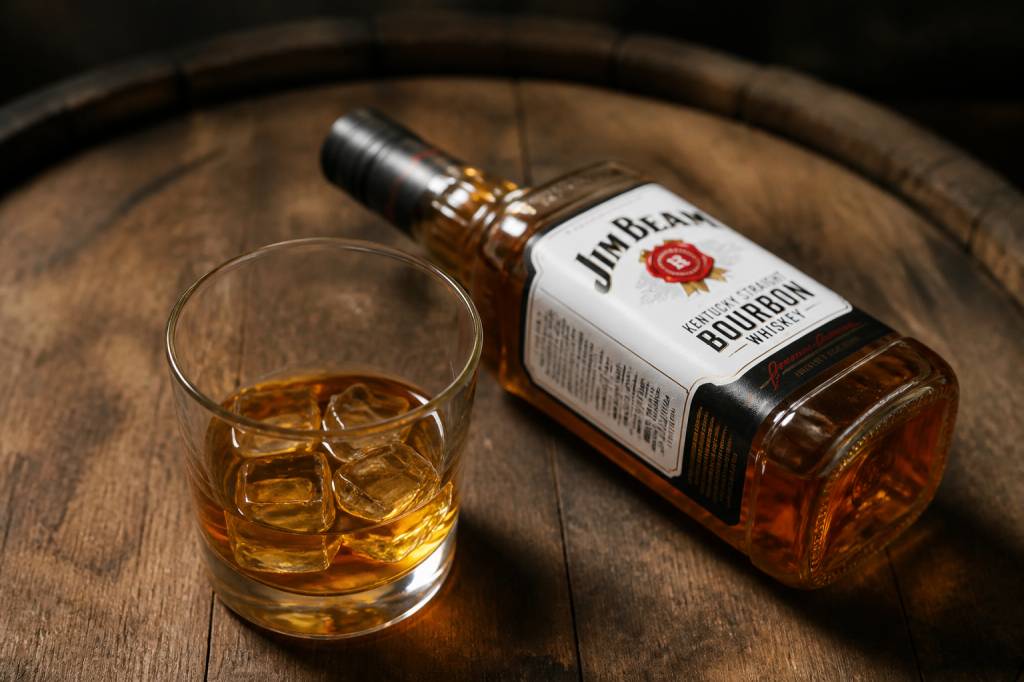
The standard Jim Beam Original Bourbon is 40% ABV, which equals 80 proof. That’s the number most people are looking for when they ask about Jim Beam’s alcohol content.
In practical terms, that means 40% of the liquid in the bottle is pure alcohol. The other 60% is water plus flavor compounds and congeners that give bourbon its character. This is the baseline for a classic bourbon and the version most often used in cocktails.
If you’ve spent any time behind a bar, you know 80 proof is the sweet spot for a lot of drinks. Strong enough to stand up in a cocktail, but not so aggressive that it bulldozes the rest of the ingredients. Jim Beam fits that role well.
What “proof” means and why it matters
Proof is just another way of expressing alcohol strength. In the U.S., proof is calculated by doubling the ABV. So:
- 40% ABV = 80 proof
- 43% ABV = 86 proof
- 45% ABV = 90 proof
- 50% ABV = 100 proof
This matters more than people think. A bourbon at 80 proof will taste lighter and more approachable, while a 90-proof bourbon can bring a bit more body, spice, and heat. Neither is “better” across the board. It depends on what you’re making and how much alcohol punch you want in the glass.
One common mistake is assuming all bourbons land in the same place. They don’t. A 2-ounce pour of 80-proof whiskey contains less alcohol than a 2-ounce pour of 100-proof whiskey, and that difference adds up fast when you’re making multiple drinks.
Jim Beam expressions and their alcohol levels
Here’s where things get interesting. “Jim Beam” is a family of whiskeys, and different bottles can have different strengths. If you’re buying, mixing, or comparing bottles, always check the label.
- Jim Beam Original Bourbon – 40% ABV / 80 proof
- Jim Beam Black – often 43% ABV / 86 proof, depending on market
- Jim Beam Devil’s Cut – 45% ABV / 90 proof
- Jim Beam Double Oak – often 43% ABV / 86 proof
- Jim Beam Honey – typically 35% ABV / 70 proof
- Jim Beam Apple – typically 32.5% ABV / 65 proof
- Jim Beam Peach – typically 32.5% ABV / 65 proof
The flavored versions are usually lower in alcohol because they’re built to be sweeter, softer, and easier to drink on their own or over ice. That lower proof can be handy if you’re mixing for a crowd that prefers lighter drinks.
Now, a small but important note: alcohol content can vary slightly depending on the country where the bottle is sold. If you’re outside the U.S., don’t assume the label will match what you saw online. Check the bottle itself.
How strong does Jim Beam taste?
Alcohol content is one thing; perceived strength is another. Jim Beam Original may be only 80 proof, but if you sip it neat, the alcohol can feel more pronounced than you expect because of its dry, oaky, slightly spicy profile.
That said, it’s generally considered an approachable bourbon. It doesn’t come in swinging like some higher-proof whiskeys. The vanilla, caramel, and charred oak notes help round out the burn, which is exactly why it works in cocktails like the Whiskey Sour, Old Fashioned, or Mint Julep.
If you’ve ever had a bourbon that tasted “hot,” that usually means the alcohol is more noticeable on the palate. Sometimes that’s because the whiskey is higher proof. Sometimes it’s because the spirit is young, less integrated, or simply not balanced. Jim Beam sits in a fairly steady middle lane.
How Jim Beam compares to other bourbons
If you’re deciding what to pour, it helps to compare Jim Beam to other common bourbons.
- Jim Beam Original – 80 proof: classic mixing bourbon, easy to use
- Maker’s Mark – 90 proof: a little richer and fuller
- Buffalo Trace – 90 proof: slightly more structure and weight
- Wild Turkey 101 – 101 proof: noticeably stronger, more assertive
- Evan Williams Black Label – 86 proof: close to Jim Beam, slightly higher strength
In cocktail work, that difference matters. An 80-proof bourbon will often make a drink feel smoother and more approachable, while a higher-proof bourbon can bring more intensity and stand up better to sweeteners, citrus, or dilution from ice.
So if a recipe calls for bourbon and doesn’t specify a brand, Jim Beam is a perfectly valid choice. If you’re aiming for a bolder flavor, you might step up to a higher-proof bottle. If you want a softer, more classic bar-style pour, Jim Beam does the job without fuss.
How alcohol content affects cocktails
When you mix cocktails, proof isn’t just a technical detail. It changes the structure of the drink.
A bourbon like Jim Beam Original at 80 proof gives you a balanced starting point. It’s strong enough to carry flavor through ice, syrup, citrus, and bitters, but not so strong that one sip feels like a challenge. That’s why it works well in drinks where harmony matters more than brute force.
Here’s what the alcohol content changes in practice:
- Flavor intensity – Higher-proof whiskey brings more heat and oak presence.
- Dilution tolerance – Stronger whiskey can handle more ice melt without disappearing.
- Sweetness balance – Lower-proof bourbon may taste sweeter or softer in mixed drinks.
- Drink strength – The final cocktail ABV depends on the spirit, the mixer, and the serving size.
For example, if you make an Old Fashioned with Jim Beam Original, the drink will usually feel smooth and easygoing. Use Devil’s Cut instead, and you’ll notice more backbone, more spice, and a longer finish. Same cocktail template, different personality.
How much alcohol is in a standard pour?
Here’s where the math becomes useful. A standard pour of bourbon in the U.S. is usually 1.5 ounces. If that bourbon is 40% ABV, then each pour contains about 0.6 ounces of pure alcohol.
That’s helpful if you’re tracking intake or building cocktails for guests. Two cocktails with the same volume can hit differently if one uses 80-proof bourbon and the other uses 100-proof whiskey. The glass doesn’t care. Your head probably will.
If you’re pouring at home, a jigger is your best friend. “Free pouring” is fine if you’re trained, but most home pours drift heavier than expected. And with bourbon, a heavy hand can turn a balanced drink into a boozy one very quickly.
Best ways to drink Jim Beam based on its strength
Jim Beam Original is versatile because its alcohol content sits in that comfortable middle range. Depending on your mood, you can use it in a few different ways.
- Neat – Best if you want to taste the bourbon as-is and focus on the oak, caramel, and spice.
- On the rocks – Ice softens the alcohol burn and opens the aroma.
- With a splash of water – A good move if the alcohol feels a little sharp and you want more flavor detail.
- In cocktails – Probably where Jim Beam shines most. Think Whiskey Sour, Old Fashioned, Boulevardier, or a simple bourbon and cola.
A little bar wisdom: if a bourbon tastes too hot neat, don’t write it off immediately. Try it with a bit of water or in a cocktail. Sometimes a spirit that feels plain on its own becomes exactly what the drink needs once it meets citrus, sugar, or bitters.
Common mistakes when checking Jim Beam’s alcohol content
It’s surprisingly easy to get tripped up here. A few mistakes come up all the time.
- Assuming all Jim Beam bottles are 80 proof – Not true. Flavored and special expressions often differ.
- Confusing bourbon with liqueur – Jim Beam Honey or Apple is not the same as standard bourbon.
- Ignoring the label – Proof is printed right there for a reason.
- Using the wrong bottle in a recipe – A lower-proof flavored whiskey can change sweetness and balance.
If you’re following a classic cocktail recipe, it usually assumes a standard bourbon around 80 proof to 90 proof. Using a flavored or lower-proof version can still work, but the result will shift. That’s not a disaster; it just means you may need to adjust the sugar, citrus, or bitters.
Is Jim Beam “strong”?
Compared with vodka or gin at 40% ABV, Jim Beam is in the same general strength range. So in pure alcohol terms, it’s not unusually strong. What makes it feel stronger is the bourbon character: oak, spice, caramel, and the warmth that comes with aged whiskey.
Compared with beer or wine, though, yes, it’s strong. A single shot of bourbon carries far more alcohol than a standard beer serving. That’s why pacing matters, especially if you’re drinking cocktails where the whiskey is mixed with something sweet and easy to sip.
If you’ve ever watched someone say, “This just tastes like cola,” and then realize they’ve had three bourbon and Cokes in an hour, you know exactly why alcohol content deserves attention. Easy drinking doesn’t mean low impact.
What to remember before pouring
If you only keep a few things in mind, make them these:
- Jim Beam Original Bourbon is 40% ABV / 80 proof.
- Other Jim Beam expressions can be stronger or weaker.
- Proof affects both flavor and the strength of your cocktail.
- Always check the label, especially with flavored versions.
- A measured pour makes for a better drink and a better next morning.
Jim Beam earns its place in the bar because it’s straightforward. You know what you’re getting: a dependable bourbon with a clear alcohol content, easy mixing behavior, and enough character to hold its own. Whether you’re building a cocktail menu or just stocking your shelf, that kind of consistency is worth something.
And if you’re mixing at home, here’s the simplest takeaway: start with the bottle in front of you, read the proof, and build from there. That one habit saves a lot of guessing — and a lot of overpouring.